
Quick Summary
Google Search Generative Experience (SGE) and AI-powered search are reshaping how content appears in search results. Instead of ranking pages based only on keywords, Google now generates AI answers using intent, context, and authority.
To optimize content for Google SGE, businesses must focus on clarity, structured answers, topical authority, and trust signals rather than traditional SEO tactics alone.
Introduction: Search Has Entered a New Era
For years, SEO meant one thing: Rank higher on Google and get clicks.
But in 2026, search has evolved. With Google SGE (Search Generative Experience) and AI-driven search engines, Google no longer acts only as a directory of links. It now behaves like an answer engine.
Users ask questions. Google responds with AI-generated summaries, comparisons, and recommendations — often without requiring a click.
This shift creates both a challenge and an opportunity.
❌ Less guaranteed traffic
✅ More brand visibility inside AI answers
The real winners will be brands that understand how to optimize content for Google SGE and AI search, not just for rankings.
What Is Google SGE (Search Generative Experience)?
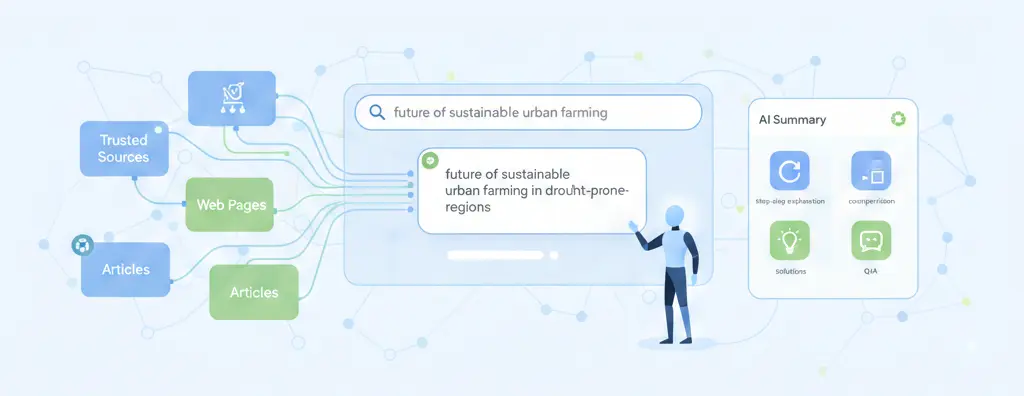
Google SGE is an AI-powered search feature that uses generative AI to:
🔹 Understand user intent deeply
🔹 Combine information from multiple trusted sources
🔹 Generate summarized answers directly on the search results page
Instead of showing only blue links, Google SGE can:
✅ Answer complex questions
✅ Explain topics step-by-step
✅ Compare products or services
✅ Suggest solutions
This fundamentally changes how content is discovered.
Traditional SEO vs AI Search Optimization
| Aspect | Traditional SEO | Google SGE & AI Search |
|---|---|---|
| Focus | Keywords & rankings | Intent & answers |
| Output | List of links | AI-generated summaries |
| Success Metric | Clicks | Visibility + authority |
| Content Style | Keyword-optimized | Clear, structured, factual |
| Strategy | Page-level | Topic-level authority |
👉 Ranking is no longer the only goal.
👉 Being referenced by AI is the new visibility.
How Google SGE Evaluates Content
Google SGE uses multiple signals to decide which content to include in AI-generated answers.
1. Intent Satisfaction
Does the content fully answer the user’s question?
2. Content Clarity
Can AI easily summarize the information?
3. Authority & Trust (E-E-A-T)
Does the content demonstrate:
🔹 Experience
🔹 Expertise
🔹 Authority
🔹 Trustworthiness
4. Structure & Readability
Is the content logically organized with headings and sections?
5. Context & Freshness
Is the content updated and relevant to current search behavior?

How to Optimize Content for Google SGE & AI Search
1. Shift From Keyword Writing to Answer Writing
AI search prefers clear answers, not keyword-heavy paragraphs.
Instead of writing long introductions, start sections with:
- A direct definition
- A clear explanation
- A concise summary
Example:
Google SGE is an AI-powered search feature that generates summarized answers by analyzing multiple trusted sources across the web.
This format helps AI extract information easily.
2. Use Question-Based Headings (AEO Strategy)
Answer Engine Optimization (AEO) is critical for SGE.
Structure content around:
- What is…
- How does…
- Why is…
- Does…
These questions mirror real user searches and help AI understand relevance.
3. Build Topical Authority, Not Isolated Articles
AI does not trust single, standalone posts.
To optimize for AI search:
- Create a pillar article
- Support it with related cluster content
- Interlink all articles logically
This signals Google that your website is an authority on the topic, not just targeting keywords.
4. Structure Content for AI Readability
AI extracts information best from structured content.
Use:
- Clear H2 and H3 headings
- Bullet points and numbered lists
- Tables for comparisons
- Short paragraphs (2–3 lines)
Well-structured content increases the chances of being used in SGE answers.
5. Optimize for Zero-Click Searches
In many SGE results, users may not click any website.
This doesn’t mean your content failed. Instead, optimize for:
- Brand mentions
- Expert positioning
- Trust-building language
When users repeatedly see your brand inside AI answers, trust builds even before a click happens.
6. Strengthen E-E-A-T Signals
E-E-A-T is more important than ever in AI search.
Ways to improve it:
- Add author bios with experience
- Include real-world examples
- Use data and facts
- Update content regularly
- Avoid exaggerated claims
AI systems prefer credible, neutral, informative content.
7. Use Schema Markup Strategically
Schema helps Google understand content structure.
Important schema types:
- Article schema
- FAQ schema
- How-To schema
While schema does not directly control SGE, it improves content interpretation, which indirectly supports AI visibility.

How Google SGE Impacts Website Traffic
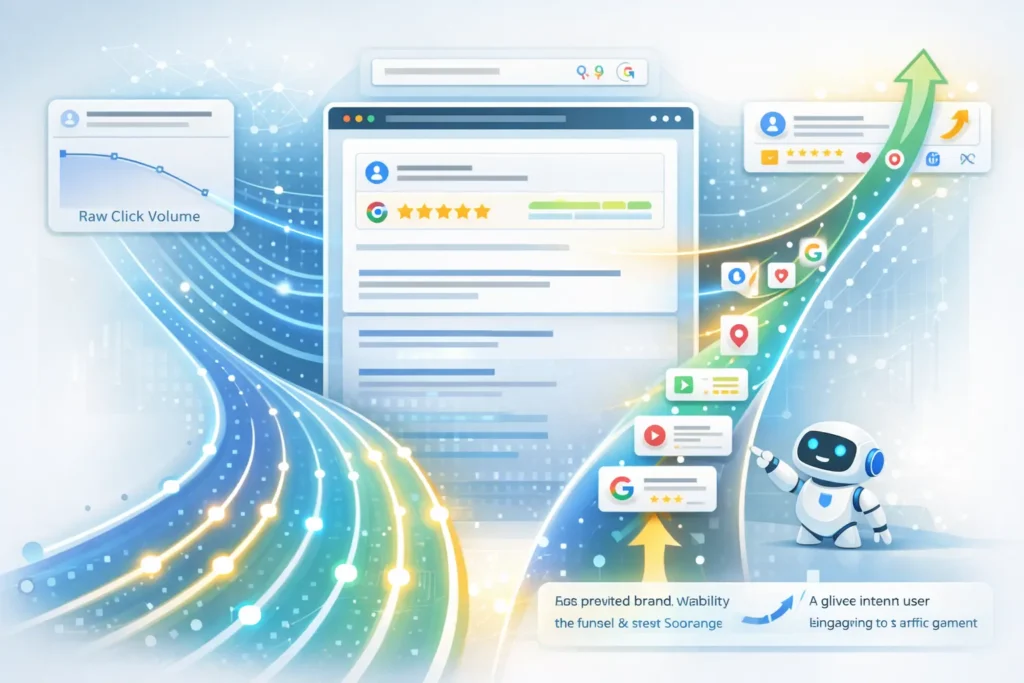
Many website owners fear traffic loss.
Reality:
- Some informational clicks may reduce
- Brand visibility increases
- Trust builds earlier in the journey
- High-intent clicks improve
SGE shifts SEO from volume-based traffic to quality-based visibility.
What Businesses Must Do Differently
To stay competitive in AI search, businesses must:
- Stop writing only for algorithms
- Focus on user understanding
- Publish authoritative content
- Invest in long-term content strategy
Websites that educate will outperform websites that only sell.
Future-Proof Content Strategy for AI Search
To remain visible long-term:
- Create evergreen content
- Update articles regularly
- Cover topics deeply, not broadly
- Combine SEO, AEO, and GEO
- Optimize for humans first
AI evolves, but useful content remains timeless.
Conclusion: Adapting Is the Only Strategy
Google SGE & AI Search are not the end of SEO — they are its evolution.
The future belongs to brands that:
- Provide real answers
- Build topical authority
- Demonstrate trust and experience
- Optimize for both humans and AI
SEO builds structure.
AEO builds clarity.
AI search rewards authority.
If your content genuinely helps users understand and decide, Google SGE will recognize and amplify it.