The digital marketing landscape is evolving at breakneck speed. What worked in 2024 is already becoming obsolete, and marketers who don’t adapt will be left behind.
If you’re wondering what are the digital marketing trends for 2025, you’re in the right place. This comprehensive guide reveals the latest digital marketing trends to watch, backed by real data and expert insights. Whether you’re a seasoned marketer or a small business owner, these top digital marketing trends every marketer should know will transform your strategy.
Let’s dive into the digital marketing strategies 2025 that will dominate the industry.
1. AI-Powered Personalization at Scale
The Shift: Generic, one-size-fits-all marketing is dead. AI marketing trends 2025 point toward hyper-personalized experiences that adapt in real-time.
The Data:
- 80% of consumers are more likely to purchase from brands offering personalized experiences (Epsilon)
- AI-driven personalization can increase marketing ROI by up to 15-20% (McKinsey)
- 71% of consumers expect companies to deliver personalized interactions (Salesforce)
What This Means for You: AI tools like ChatGPT, Jasper, and Claude are enabling marketers to create personalized content, emails, and product recommendations at scale. Dynamic content that adapts based on user behavior, location, and preferences will become the standard.
Action Steps:
- Implement AI-powered chatbots for personalized customer service
- Use predictive analytics to anticipate customer needs
- Create dynamic email campaigns that change based on user behavior
- Leverage AI content generation for personalized product descriptions
2. Zero-Click Searches and AEO Dominance
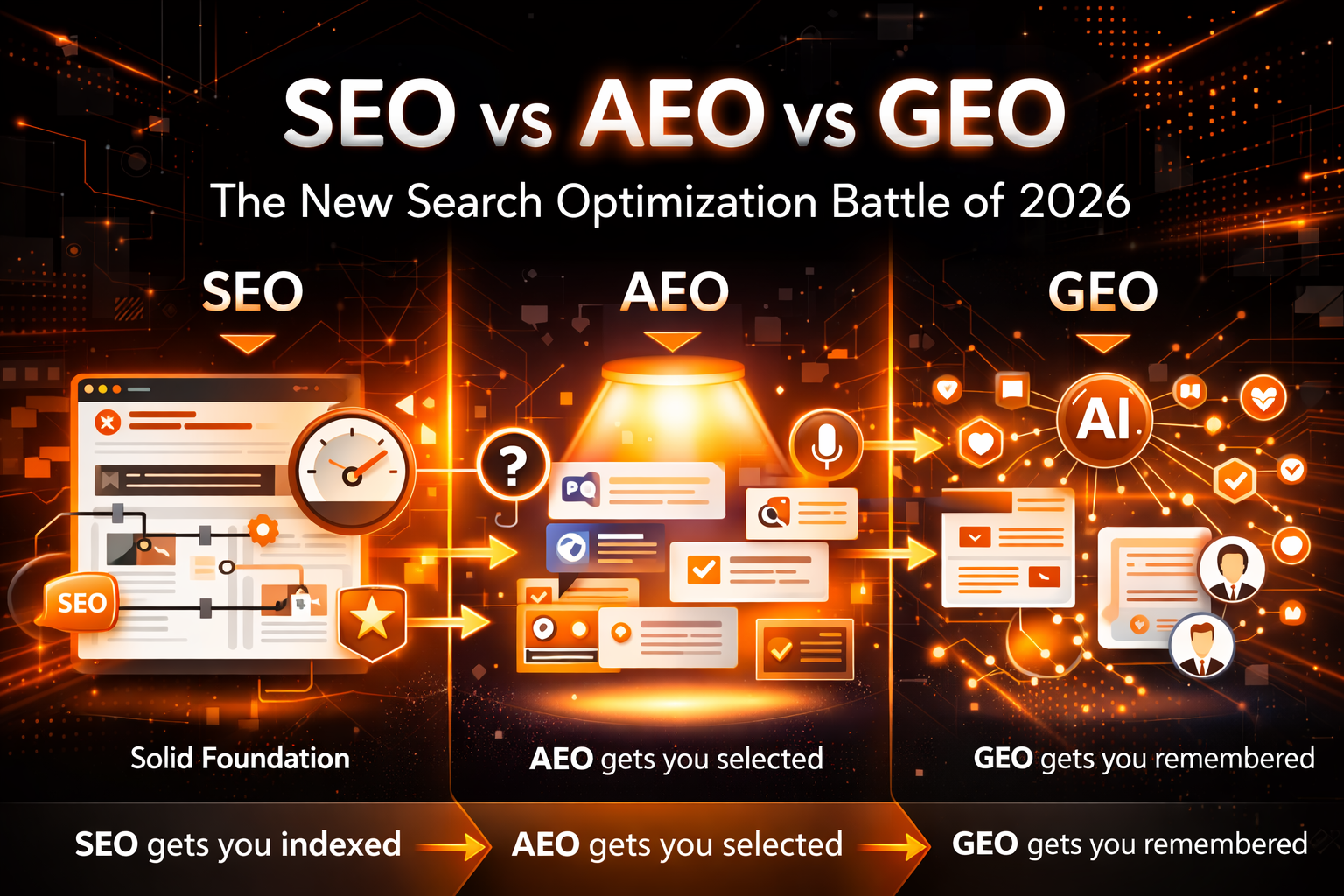
The Shift: SEO is evolving into AEO (Answer Engine Optimization). With AI overviews, featured snippets, and voice search, users are getting answers without clicking through to websites.
The Data:
- Nearly 60% of Google searches now result in zero clicks (SparkToro)
- Voice search is expected to reach $80 billion in commerce by 2025 (OC&C Strategy Consultants)
- 40% of adults use voice search at least once per day (Google)
What This Means for You: The future of digital marketing isn’t just about ranking—it’s about being the answer. Your content needs to be structured for AI engines like ChatGPT, Gemini, and Perplexity, not just Google.
Action Steps:
- Optimize for featured snippets with concise, direct answers
- Use structured data (schema markup) extensively
- Create FAQ sections targeting voice search queries
- Focus on conversational, question-based keywords
- Build content that AI engines can cite and reference
3. Short-Form Video Continues to Rule
The Shift: Short-form video isn’t just trending—it’s the primary content format for engagement and discovery.
The Data:
- 73% of consumers prefer to watch short-form videos to learn about products (Wyzowl)
- Instagram Reels have 22% higher engagement than standard video posts (Social Insider)
- TikTok users spend an average of 95 minutes per day on the platform (Statista)
- 90% of marketers using short-form video will increase or maintain their investment in 2025 (HubSpot)
What This Means for You: Social media marketing trends 2025 are clear: if you’re not creating Reels, TikToks, and YouTube Shorts, you’re invisible to younger audiences.
Action Steps:
- Repurpose long-form content into 15-60 second clips
- Use trending audio and hashtags for maximum reach
- Focus on educational, entertaining, or inspiring content
- Post consistently (3-5x per week minimum)
- Hook viewers in the first 3 seconds
4. First-Party Data Becomes Marketing Gold
The Shift: With third-party cookies dying and privacy regulations tightening, first-party data collection is now essential.
The Data:
- 88% of marketers say first-party data is critical to their strategy (Google)
- Companies using first-party data for marketing see 2.9x higher revenue growth (Boston Consulting Group)
- 79% of consumers are willing to share personal data for personalized experiences (Accenture)
What This Means for You: Building your own customer database through email lists, surveys, and direct interactions will give you a massive competitive advantage.
Action Steps:
- Offer valuable lead magnets (ebooks, templates, courses) for email signups
- Use progressive profiling to gradually collect user data
- Implement preference centers so users can customize their experience
- Use zero-party data (data customers intentionally share) through quizzes and surveys
- Build a robust CRM strategy
5. Authentic Influencer Partnerships Over Celebrity Endorsements
The Shift: Mega-influencers are out. Micro and nano-influencers with engaged communities are in.
The Data:
- Micro-influencers (10K-100K followers) have engagement rates 60% higher than macro-influencers (Later)
- 82% of consumers are likely to follow recommendations from micro-influencers (ExpertVoice)
- Influencer marketing ROI is $5.78 for every dollar spent (Influencer Marketing Hub)
What This Means for You: Authenticity beats reach. Partner with smaller influencers whose audiences genuinely trust them, especially for digital marketing trends small business owners should embrace.
Action Steps:
- Identify niche micro-influencers in your industry
- Focus on long-term partnerships over one-off posts
- Allow creative freedom—authentic content performs better
- Track engagement metrics, not just follower counts
- Consider employee advocacy programs
6. Interactive Content Drives Engagement
The Shift: Passive content consumption is declining. Audiences want to participate, not just observe.
The Data:
- Interactive content generates 2x more engagement than static content (Content Marketing Institute)
- 93% of marketers rate interactive content as effective in educating buyers (DemandGen)
- Quizzes, polls, and assessments have 40-50% completion rates (Outgrow)
What This Means for You: Content marketing trends 2025 emphasize two-way interaction. Calculators, quizzes, polls, and interactive infographics keep users engaged longer and provide valuable data.
Action Steps:
- Create personality quizzes related to your product/service
- Use polls and questions in Instagram Stories and LinkedIn posts
- Build ROI calculators or assessment tools
- Develop interactive infographics and data visualizations
- Host live Q&A sessions and webinars
7. Sustainability and Purpose-Driven Marketing
The Shift: Consumers, especially Gen Z and Millennials, are demanding brands take stands on social and environmental issues.
The Data:
- 78% of consumers want brands to address environmental and sustainability issues (Porter Novelli)
- 73% of Gen Z consumers will pay more for sustainable products (First Insight)
- Purpose-driven brands grow 3x faster than competitors (Zeno Group)
What This Means for You: Greenwashing is easy to spot. Genuine commitment to sustainability and social responsibility must be woven into your brand story.
Action Steps:
- Audit your supply chain and operations for sustainability
- Communicate your values transparently (including challenges)
- Partner with environmental or social organizations
- Share behind-the-scenes content about your sustainability efforts
- Let customers participate (tree planting programs, donations with purchases)
8. Community-Building Over Broadcasting
The Shift: Social media is returning to its roots: actual social connection. Brands that build communities win.
The Data:
- Private community groups have 10x higher engagement than brand pages (Facebook)
- 76% of consumers engage with brands in private channels like messaging apps (Twilio)
- Community-driven businesses see 5-7x higher retention rates (CMX)
What This Means for You: Online marketing trends show that building a loyal community around your brand creates evangelists who market for you organically.
Action Steps:
- Create exclusive Facebook Groups, Discord servers, or Slack communities
- Foster user-generated content with branded hashtags
- Host virtual or in-person meetups for community members
- Recognize and reward your most engaged community members
- Facilitate member-to-member connections, not just brand-to-member
9. Omnichannel Marketing Integration
The Shift: Customers interact with brands across 6-8 touchpoints before purchasing. Disconnected channels create friction.
The Data:
- Omnichannel campaigns drive 3x higher engagement than single-channel (Invesp)
- Brands with strong omnichannel strategies retain 89% of customers vs. 33% for weak strategies (Aberdeen Group)
- 73% of customers use multiple channels during their shopping journey (Harvard Business Review)
What This Means for You: Your messaging, branding, and customer experience must be seamless whether someone discovers you on TikTok, reads your blog, or visits your store.
Action Steps:
- Map your customer journey across all touchpoints
- Use unified marketing automation platforms
- Ensure consistent messaging and visual branding everywhere
- Implement retargeting across multiple platforms
- Use QR codes to bridge offline and online experiences
10. Conversational Marketing and AI Chatbots
The Shift: Customers expect instant responses. AI-powered chatbots are providing 24/7 customer service and lead qualification.
The Data:
- 64% of consumers say 24/7 service is the best feature of chatbots (Tidio)
- Chatbots can reduce customer service costs by up to 30% (IBM)
- 80% of businesses plan to use chatbots by 2025 (Oracle)
- Conversational marketing can increase conversions by 10-15% (Drift)
What This Means for You: New marketing strategies leverage AI to have real-time conversations with prospects, qualifying leads and answering questions instantly.
Action Steps:
- Implement AI chatbots on your website and social media
- Use conversational landing pages that adapt to user inputs
- Set up automated email sequences that respond to user behavior
- Integrate chatbots with your CRM for lead qualification
- Use WhatsApp Business and Facebook Messenger for customer service
What Do These Marketing Trends 2025 Mean for Your Strategy?
The digital marketing forecast for 2025 is clear: adaptability, authenticity, and AI integration are non-negotiable.
Here’s your action plan:
For Small Businesses:
Focus on digital marketing trends small business can implement affordably:
- Start with one short-form video platform (TikTok or Reels)
- Build your email list aggressively
- Partner with 2-3 micro-influencers
- Use free AI tools for content creation
- Create a simple community (Facebook Group or Discord)
For Enterprise Marketers:
Leverage your resources for these emerging marketing trends:
- Invest in AI-powered personalization platforms
- Build comprehensive first-party data strategies
- Create omnichannel experiences with unified dashboards
- Develop sophisticated AEO optimization
- Build dedicated community platforms with full support teams
Universal Priorities:
Regardless of size, every marketer should:
- Experiment with AI tools monthly to stay current
- Prioritize video content in all formats
- Build genuine communities, not just audiences
- Optimize for answer engines, not just search engines
- Collect and leverage first-party data ethicall
What’s Next?
Which of these digital marketing strategies 2025 will you implement first? The brands that start testing these approaches now will have a massive advantage over competitors who wait.
Remember: the latest digital marketing trends to watch aren’t about following the crowd—they’re about understanding where your audience is going and getting there first.
Start small, test constantly, measure everything, and scale what works. That’s how you win in 2025 and beyond.
Ready to dominate 2025? Start implementing these strategies today.